
01
Parenting-time changes
Late, missed or changed collections and handovers, including the agreed plan, actual times, location and any notice given.
Private custody journal
Record schedule changes, expenses, messages and child-related events in one private place. Add supporting files, turn emotional notes into neutral drafts and export selected entries as an organized PDF when you need them.

14 days free · Cancel anytime · Private by design
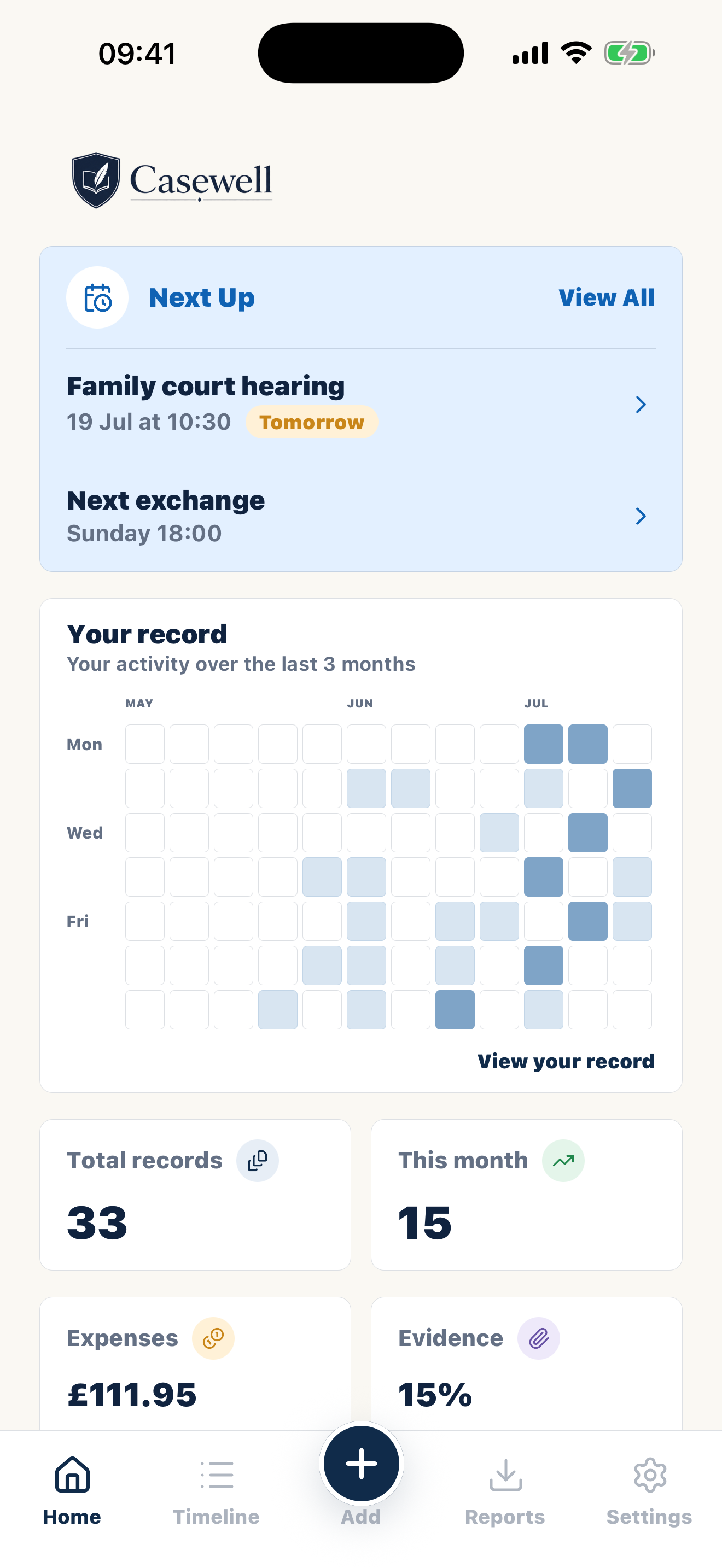
A clearer way to prepare
Come to court ready, not stressed.
Turn messages, receipts and everyday notes into a clear solicitor-ready record.
New record
Pickup was scheduled for 5:00pm. The other parent arrived at 5:42pm.
Report ready
Ready for your solicitor or lawyer to review.
What belongs in the journal
Late, missed or changed collections and handovers, including the agreed plan, actual times, location and any notice given.
Requests, confirmations and unanswered messages when the outcome affects arrangements—not a running commentary on every conversation.
The item, amount, date, who paid, any request for contribution and the receipt or invoice that supports the entry.
Appointments, school information and observable effects on the child, using concrete details rather than diagnoses or assumptions.
What was agreed, the source of the agreement, any deadline and what happened next, so the entry remains understandable months later.
Keep supporting files linked to the event they explain, with enough context to understand why each file matters.
A reliable entry
State the expected date, time, place or responsibility and identify where that expectation came from.
Use exact times, actions and words where they matter. Keep assumptions about motives separate from what you directly observed.
Record any practical effect, supporting file and next step. If something is corrected later, preserve the correction with its context.
Instead of “They were late again and did not care,” record: “Collection was arranged for 17:00. The other parent arrived at 17:42. I did not record any notice of delay before collection.” The second version identifies the plan, observable event and limit of the record.
A stronger journal does not catalogue ordinary irritation. Leave out insults, predictions, diagnoses and claims about motive. Include an event when it changes an arrangement, creates a practical impact, records an agreement or connects to material you may genuinely need to review.
Inside Casewell
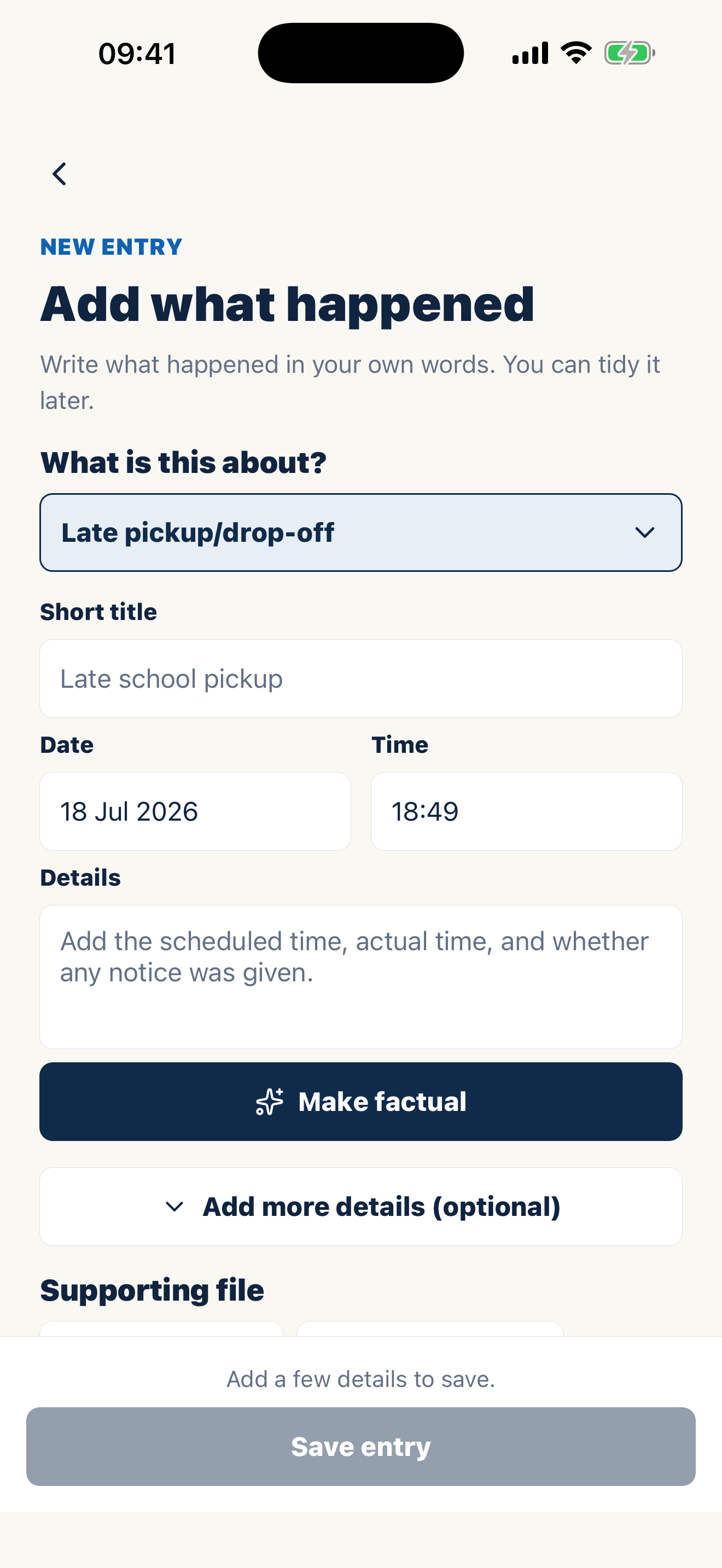
Start in your own words, then use Make factual to produce a clearer, more neutral draft. The original remains available and you decide whether to accept the change.
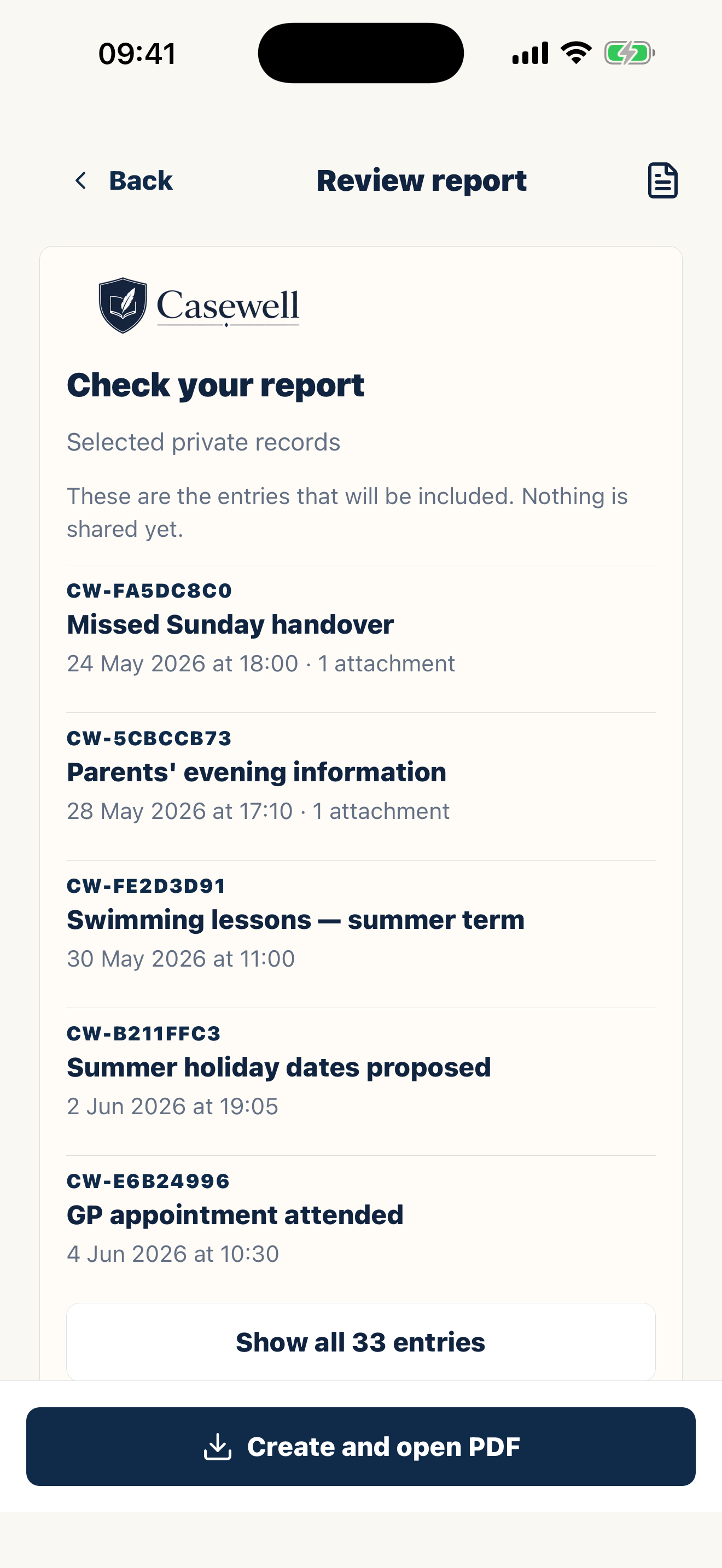
Choose the records that matter and create a readable PDF with event dates, saved revisions and linked supporting material, ready to take into a conversation with a solicitor, mediator or other professional.
FAQ
Occasional routine entries help show a consistent habit and establish what normal looks like. You don't need a lengthy note when nothing material happened.
Tag each entry to the relevant child or children. Separate views are useful, but a shared event should remain one entry rather than conflicting duplicates.
Correct obvious errors transparently. Preserve the original recorded time and keep a dated edit or addendum so a reader can see what changed.
Common records
Every entry becomes part of a clear, court-ready PDF.
Casewell does not provide legal advice or guarantee professional acceptance.