
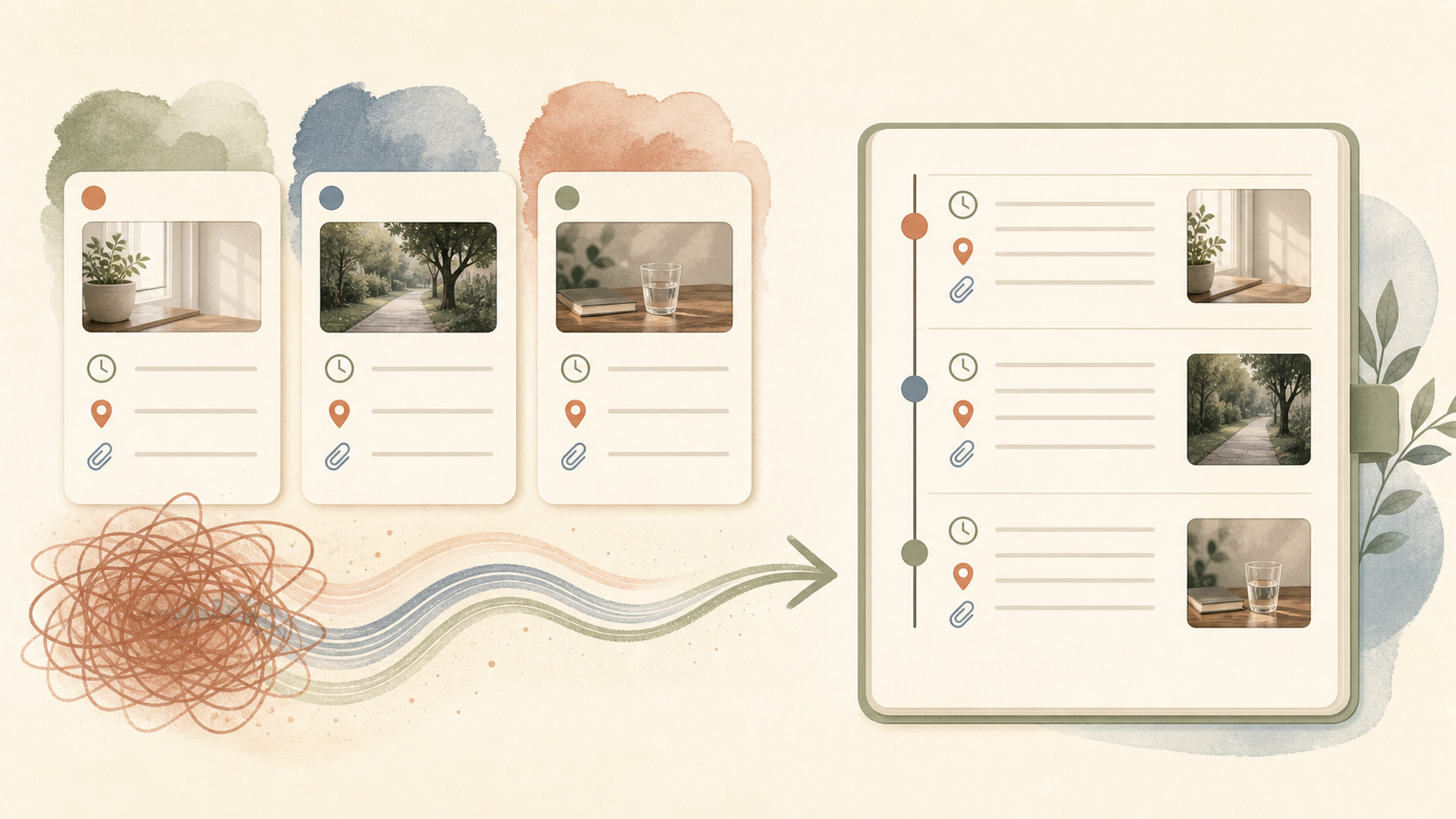
How to read this in Australia
A record earns its weight by staying factual. Note what was planned, note what took place, and attach the file or message that supports the note.
Start from the parenting order, plan or written agreement now in force. Most family law here is federal, though Western Australia follows a different court path in some cases. Use the words that appear in your own papers.
Keep everyday days in the private record alongside the difficult ones. When a review is needed, select only the entries that answer the question in front of you. That is what lets an Australian family lawyer find the key facts quickly.
State, territory and pathway checklist
Name the state or territory and the court registry. Say if the plan is an order, parenting plan, or written deal. Use the words from that paper. Flag any Western Australian court path for legal review. Keep court papers, dispute help records, and daily notes in separate groups.
Copyable incident record
INCIDENT ID: INC-[YEAR]-[NUMBER]
EVENT DATE/TIME: [exact / approximate]
RECORDED DATE/TIME:
LOCATION:
PEOPLE PRESENT:
EXPECTED CONTEXT: [schedule, agreement or reason]
DIRECT OBSERVATIONS IN ORDER:
1.
2.
3.
EXACT WORDS: [speaker + exact quote]
REPORTED INFORMATION: [source + statement]
OBSERVABLE EFFECT:
ACTION TAKEN:
EXPERT / REFERENCE NUMBER:
EVIDENCE IDS:
LIMITATIONS:
DATED ADDENDUM: [never overwrite the original]
TIMELINE LINE:
Before and after: emotional versus factual
Before: He exploded at the handover, terrified our daughter and deliberately made a scene because he is unstable. After: `At 18:07 outside North Street station, R raised his voice and said, “You always ruin everything.” A stepped behind me, covered both ears and cried for about two minutes.
I moved with An into the staffed ticket hall. Witness: station employee at the barrier. Name unknown. Evidence: audio begins after the quoted words, AUD-012. I can't decide R's motive or mental state. ` The first version blends an event with interpretation and diagnosis. The rewrite keeps audible words, visible behaviour, protective action, a source and an honest limitation.
Label every sentence before you save
Use three labels during review:
- Event: what you directly saw or heard, with time and place
- Interpretation: a conclusion about motive, personality, cause or future risk
- Evidence: a message, image, audio file, receipt, witness or expert record that may support a statement
Delete or relocate interpretation. Attribute information you didn't observe: Teacher emailed that... is accurate; The child was late to school overstates your basis if you only saw the email. Evidence has limits: an image can show a scene. But it may not set up what occurred before or after it.
Incident decision tree
- Is anyone in immediate danger? Contact the appropriate emergency or safeguarding service. Recordkeeping comes second.
- Did you directly observe the event? Put it in direct observations. If not, identify the source.
- Are exact words important? Quote only words you can reproduce accurately. Otherwise state that you are summarizing.
- Is there supporting material? Keep the original and assign a stable evidence ID.
- Did new information arrive later? Add a dated addendum. Don't rewrite the initial entry.
- Does it belong in a broader pattern? Add one timeline line, then let the source entry keep the detail.
Fit the incident into the chronology
A timeline line should be shorter than the record: 03 Aug 2026 18:07 | Exchange incident | Raised voice. Child covered ears and cried. Moved to staffed area | INC-2026-018. AUD-012. Later information gets its own line: 05 Aug | Evidence received | Station incident reference supplied | REF-006 linked to INC-2026-018.
Don't combine separate events to make them sound continuous. Keep everyday exchanges in the surrounding timeline so a reviewer can assess frequency and context. The factual incident report guide explains the writing method behind each field.
Do a safety and privacy check before sharing
Remove unnecessary child, witness or third-party details from a working copy, confirm that the recipient has a secure channel, and keep the original unchanged. If the event involves immediate danger, safeguarding or a criminal allegation, contact the appropriate local service or expert rather than relying on the template alone.
An Australian review note
Copy a factual co-parenting incident log, compare emotional and neutral wording, and connect each event to evidence and timeline references. Sharing any of it in Australia takes a few more steps.
Work from a copy when someone needs to review the record. Include the current order or plan, a short timeline and a small set of named source files.
Check current court orders and rules before you send the pack. An Australian family lawyer can say what belongs in an affidavit, annexure, or private file.
Name the state, territory, and court path. Take extra care in Western Australia. A national guide cannot set the right court step for every case.
What a coherent Australian record looks like
Casewell keeps the dated entry, its source file and any later addition together in one private timeline. When a review is needed, select only the records that answer the question in front of you and share those with an Australian family lawyer.
Try for freeHow soon should I write an incident entry?
Record the basic facts as soon as it is safe and practical. Keep the true recorded time, then review wording once you can distinguish observation from reaction.
Should I include a child's words?
Record volunteered words exactly when relevant, with context and without repeated questioning. Safeguarding and expert-reporting rules vary. So seek local guidance where needed.
Can I correct a mistake?
Keep the original entry and add a dated correction explaining what changed and why. That preserves the record's history.
Is this a court form or affidavit?
No. It is a method for keeping a private factual record. Current court rules and expert advice decide how material is prepared or used in a proceeding.
Sources
Federal family law supplies the broad framework, while Western Australia and some related processes have distinct pathways. The official source gives orientation only. This page is a records guide, not legal advice.