
How to read this in the UK
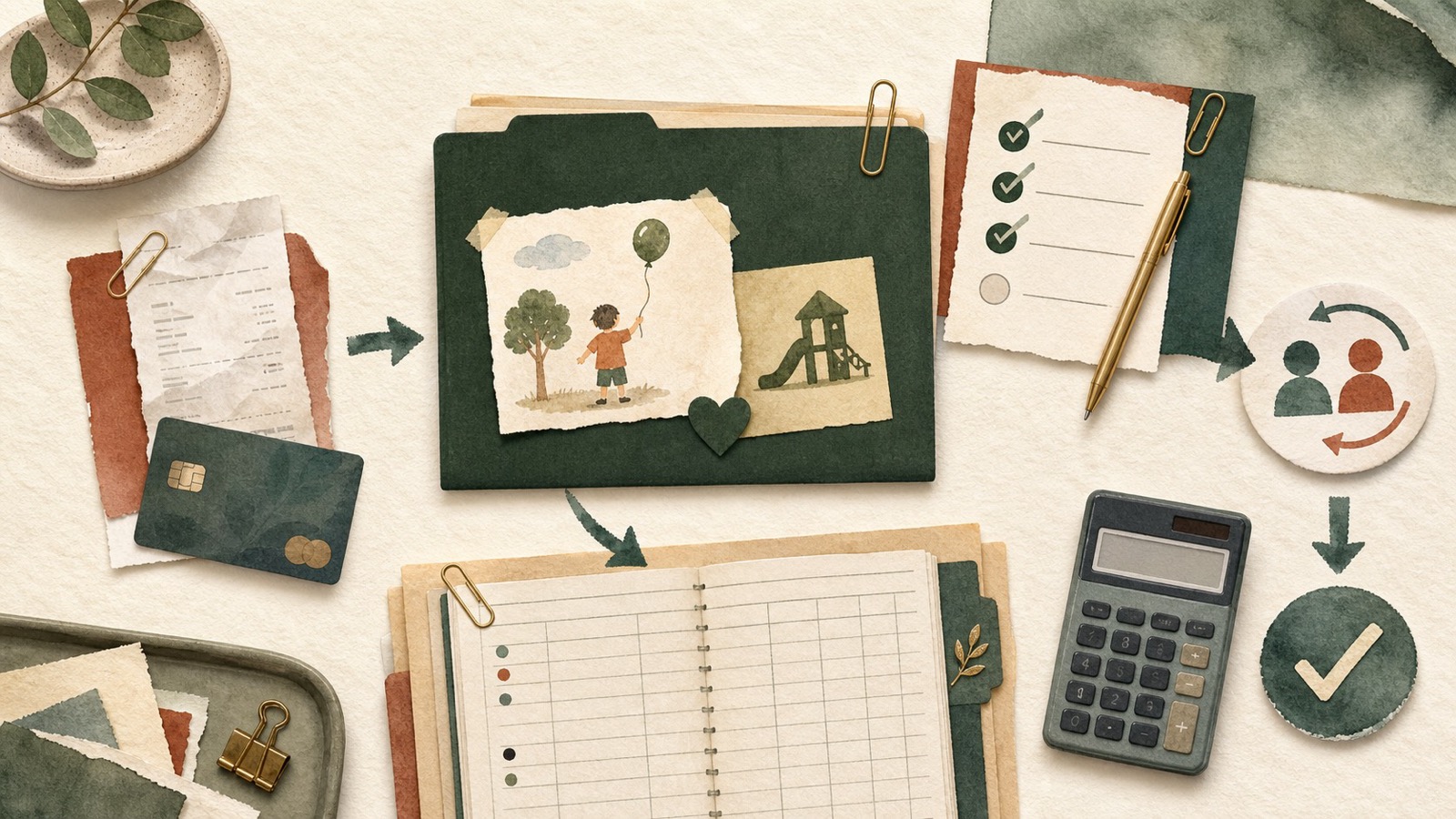
Three things need to stay separate in a record. What the arrangement says, what actually happened, and the file that shows it. Blur them together and a reader has to take your word for it. Keep them apart and the record speaks for itself.
The UK is not one family-law system. England and Wales, Scotland and Northern Ireland each have their own rules, forms and vocabulary. Use the words that appear in your own order or agreement rather than a term borrowed from somewhere else.
Keep the complete source file, not a crop of it. Write events in the order they happened, and say plainly where something is missing or unclear. A family solicitor can work with a record like that. They cannot work with a reconstruction.
Locality checklist for a UK review
Name the UK nation and court. Copy the key words from the current order or plan. Add places only when they help explain the event. Remove home or school addresses if the reader does not need them. Check the right court rules before you use a private timeline as a formal record.
Start with the agreement
Before writing about the disagreement, write the rule you are using. That may be a court order, parenting plan, child support agency record, email, text message, or your usual shared-expense agreement. If there is no written rule, say that. A future reader should be able to see why you thought the cost was shared.
Use one line for each cost
Do not mix several expenses into one paragraph. Give each cost its own line with the date, amount, type, child, who paid, and whether repayment was requested. This makes the record easier to total later and easier for an expert to check.
Attach the receipt to the entry
A receipt, invoice, bank screenshot, school notice or payment confirmation should sit beside the expense it supports. Name what the file shows. For example: “receipt shows school shoes, 42.00, paid 8 March.” Do not rely on a camera roll or email search to find it later.
Record the request and response
If you ask for repayment, record the date, channel and exact amount requested. If the other parent replies, keep the full message or a clear screenshot. If there is no reply, record that calmly after a reasonable time. Do not write “refused” unless they actually refused.
Keep disputed costs in the same log
A disputed cost still belongs in the log. Mark it as disputed and write the reason given. This is better than keeping a separate angry note. It lets you see the full picture: paid, unpaid, partly paid and disputed.
Export only what is useful
When sharing the record, filter by date or type and include the receipts that matter. A clean expense summary is usually easier to review than a long message chain with receipts scattered through it.
A UK review note
A simple way to track shared child expenses after divorce with receipts, repayment status, messages and a clear running record. Sharing any of it in the UK takes a few more steps.
Before you share any of this, work from a copy. Remove private details the reader does not need, and leave the original file untouched.
Check each key sentence. Can you link it to a date or source? If not, change the summary. Do not fill the gap with a guess.
Name the UK nation and court on the review copy. Keep the words used in the order. Ask a family solicitor about court rules and what you may need to share.
Example: one expense entry
This is the level of detail that is usually enough for one everyday cost.
- Expense
School shoes for A.
- Date and amount
8 March 2026, 42.00.
- Who paid
Parent A paid by debit card.
- Agreement context
School uniform costs are shared 50/50 under the written parenting agreement.
- Request
20.00 requested by text on 9 March.
- Status
No response by 16 March. Marked outstanding, not refused.
- Proof attached
Receipt photo and message screenshot.
Before you mark an expense as unpaid
Use this quick check before you add the cost to a report.
Copyable shared-expense note
Use this when you need a plain record without extra wording.
EXPENSE:
CHILD:
DATE PAID:
AMOUNT:
TYPE:
WHO PAID:
WHY IT WAS NEEDED:
AGREEMENT OR MESSAGE THAT APPLIES:
REPAYMENT REQUESTED:
RESPONSE OR PAYMENT RECEIVED:
CURRENT STATUS: paid / unpaid / partly paid / disputed
RECEIPT OR PROOF ATTACHED:
NOTES:
What a coherent UK record looks like
Casewell keeps the dated entry, its source file and any later addition together in one private timeline. When a review is needed, select only the records that answer the question in front of you and share those with a family solicitor.
Try for freeShould I log small expenses?
Yes, if they are shared under your agreement or part of a repeated pattern. Small costs add up, and a complete log is easier to trust than a selective one.
What if the other parent says the cost was not agreed?
Mark the item as disputed and keep the message. Do not argue inside the record. The record should show the cost, the request and the response.
Can Casewell replace legal advice?
No. Casewell helps you keep clear records. A qualified expert can advise on your agreement, order or local child support rules.
Does this cover Scotland and Northern Ireland too?
No. England and Wales, Scotland and Northern Ireland have separate family-law systems, forms and terms. Use the page to organise a working record and get advice for the relevant legal system.
Sources
England and Wales, Scotland and Northern Ireland have separate family-law systems, forms and terms. The official source gives orientation only. This page is a records guide, not legal advice.