
How to read this in Australia
A record earns its weight by staying factual. Note what was planned, note what took place, and attach the file or message that supports the note.
Start from the parenting order, plan or written agreement now in force. Most family law here is federal, though Western Australia follows a different court path in some cases. Use the words that appear in your own papers.
Keep everyday days in the private record alongside the difficult ones. When a review is needed, select only the entries that answer the question in front of you. That is what lets an Australian family lawyer find the key facts quickly.
State, territory and pathway checklist
Name the state or territory and the court registry. Say if the plan is an order, parenting plan, or written deal. Use the words from that paper. Flag any Western Australian court path for legal review. Keep court papers, dispute help records, and daily notes in separate groups.
Separate appointments, instructions and communication
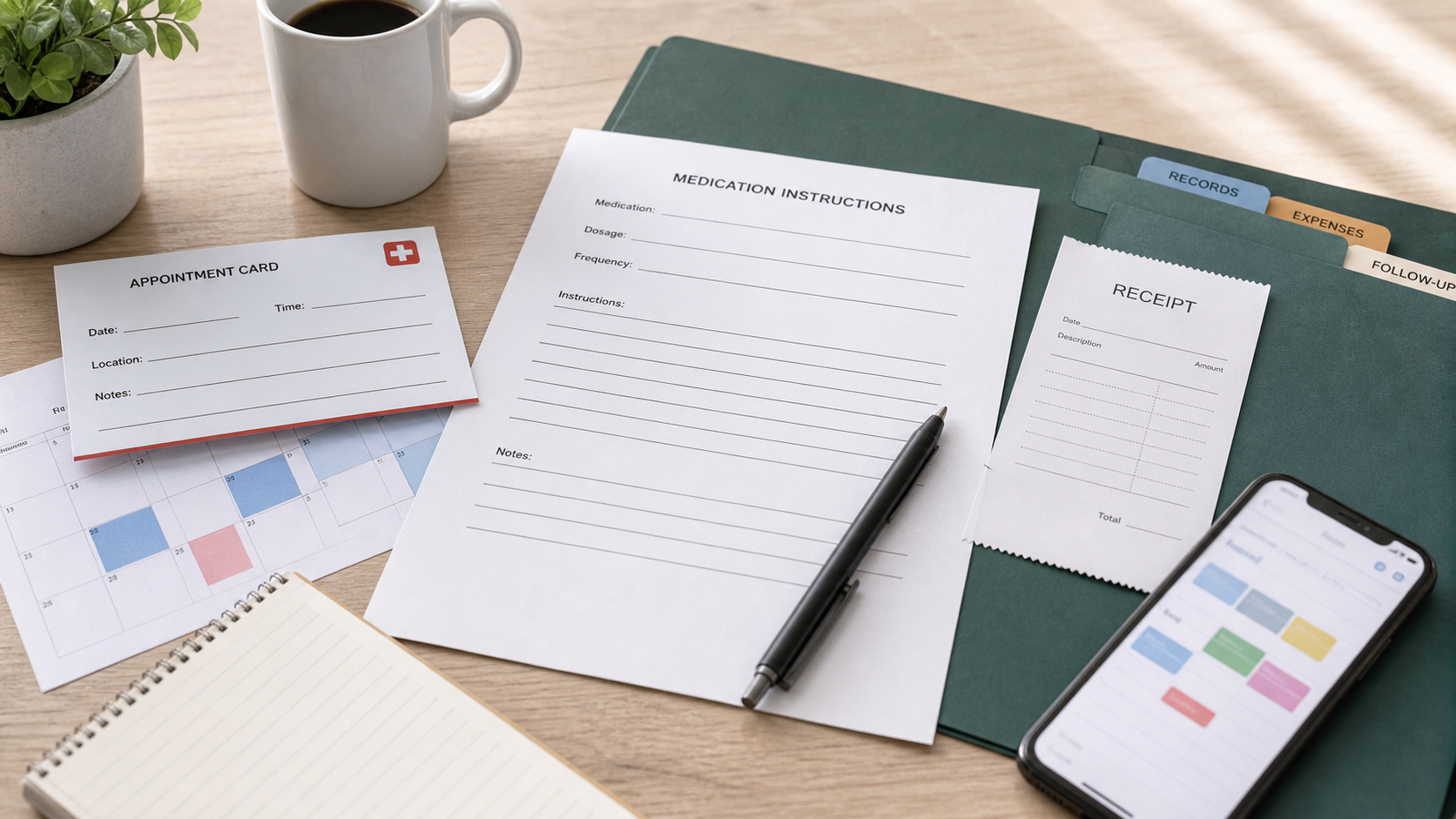
An appointment note, medication instruction and message about follow-up are different records. Link them, but do not merge them into one vague medical note.
Record who knew what and when
For disputed medical messages, the date shared can matter as much as the appointment date. Record when the information was received, when it was sent and what response followed.
Keep expenses connected to care
Medical costs should link to the appointment, invoice, receipt, insurance record and repayment request. A reviewer should be able to see why the cost arose and what remains outstanding.
Protect sensitive child information
Medical records often include private details that should not be shared widely. Keep originals securely and ask an expert what can be disclosed, redacted or filed.
Document missed appointments carefully
If an appointment was missed or instructions were not followed, record the scheduled appointment, source, what happened, messages and follow-up. Avoid medical conclusions unless they come from a qualified source.
Separate care facts from parental disagreement
Keep provider instructions, attendance and follow-up in the medical record. Put a disagreement about messages or repayment in a linked messages or expense entry. This protects the clinical source from being rewritten as an argument.
An Australian review note
Organize medical records for custody planning. Appointments, instructions, medication, messages, expenses, privacy and review-ready exports. Sharing any of it in Australia takes a few more steps.
Work from a copy when someone needs to review the record. Include the current order or plan, a short timeline and a small set of named source files.
Check current court orders and rules before you send the pack. An Australian family lawyer can say what belongs in an affidavit, annexure, or private file.
Name the state, territory, and court path. Take extra care in Western Australia. A national guide cannot set the right court step for every case.
Copyable medical record entry
Use this for one appointment, instruction or medical messages.
MEDICAL RECORD REF:
DATE OF APPOINTMENT OR RECORD:
DATE RECEIVED:
CHILD:
PROVIDER OR SOURCE:
WHO ATTENDED:
INSTRUCTIONS OR OUTCOME:
MEDICATION OR FOLLOW-UP:
MESSAGES SHARED:
EXPENSE OR INSURANCE REF:
RELATED EVENT REF:
PRIVACY REVIEW STATUS:- Useful note
Appointment attended 12 Mar. Written instruction received same day and shared by message at 15:42. Follow-up appointment pending.
- Avoid
Medical conclusions that are not stated in the source record.
Medical custody record checklist
Use this before adding a medical item to a review pack.
What kind of medical record is this?
Classify the item before writing the entry.
Is it an appointment record?
Record who attended, outcome and follow-up.
Is it an instruction?
Record when it was received, shared and acted on.
Is it an expense?
Link it to the care event and repayment status.
Is it a disputed communication?
Keep the full thread and exact source.
What a coherent Australian record looks like
Casewell keeps the dated entry, its source file and any later addition together in one private timeline. When a review is needed, select only the records that answer the question in front of you and share those with an Australian family lawyer.
Try for freeCan this type of record be used in custody preparation?
It can help organize facts and source material. A court or qualified expert decides relevance, court process, privacy and weight.
Should I keep the original source?
Yes. Keep the original where possible and use a separate working copy for notes, summaries or redactions.
How should I share these records?
Share a focused, filtered pack only after checking privacy, safety and local process with a qualified expert.
Is this a court form or affidavit?
No. It is a method for keeping a private factual record. Current court rules and expert advice decide how material is prepared or used in a proceeding.
Sources
Federal family law supplies the broad framework, while Western Australia and some related processes have distinct pathways. The official source gives orientation only. This page is a records guide, not legal advice.