
You paid the orthodontist, photographed the receipt, and sent a message asking for reimbursement. Weeks later, the other parent says the amount was never requested, the receipt doesn't show which child it concerned, or the agreement didn't cover the expense. Your bank statement proves that you paid something, but it doesn't prove the complete sequence from the governing clause to the remaining balance.
A reliable co parenting expense tracker must preserve that sequence. It should show what the expense was, who paid, why it was incurred, which rule applied, when reimbursement was requested, what response followed, and whether the amount was paid in full, paid partly, disputed, or left unresolved. The tool matters less than the structure.
Why a Co Parenting Expense Tracker Has to Be More Than a Spreadsheet
A spreadsheet can total columns. It usually doesn't preserve the full history of a reimbursement dispute unless you build that capability deliberately. A receipt may sit in a phone gallery, the request may be buried in a text thread, and the eventual partial payment may appear only on a bank statement. Months later, reconstructing the order of events becomes difficult.
Formal child-maintenance administration illustrates why exact records matter. At the end of December 2024, the Child Maintenance Service in Great Britain managed 750,000 arrangements involving 680,000 paying parents, covering more than 1 million children. During the quarter ending December 2024, £372.2 million was due through Direct Pay and Collect and Pay. Within Collect and Pay, £95.3 million was scheduled, £67.8 million was paid, and £27.5 million remained unpaid. The CMS also reported that 68% of paying parents using Collect and Pay made at least some payment, while 22% paid up to 90% of the amount due and 46% paid more than 90% (Child Maintenance Service statistics to December 2024).
The lesson isn't that a private school fee is the same as regulated child maintenance. It isn't. The lesson is that a payment status can be more complicated than “paid” or “unpaid.” A useful ledger must distinguish the original amount, the amount requested, the amount received, the payment dates, and the balance still outstanding.
Build the record as an event sequence
A defensible entry connects at least these events:
- Governing basis: Identify the relevant parenting-plan clause, court-order paragraph, or written agreement.
- Expense: Record the purchase date, child, purpose, category, payer, amount, and payment method.
- Proof: Attach the complete receipt, invoice, or other supporting document.
- Request: Record when reimbursement was requested, the amount claimed, the channel used, and any applicable deadline.
- Response: Preserve whether the request was agreed, rejected, ignored, or partially accepted.
- Repayment: Log each repayment separately, including date, amount, and method.
- Balance: Calculate the amount remaining and label the current status.
Historical persistence matters too. Since the CMS began in 2012, £654.6 million in unpaid maintenance had accumulated by June 2024, representing 8% of maintenance due through the service since launch (Child Maintenance Service statistics to June 2024). That doesn't decide whether your expense is recoverable, but it shows why old records can't depend on memory alone.
A shared spreadsheet may be perfectly adequate for cooperative parents with simple expenses. It becomes fragile when it lacks edit history, linked documents, separate dates, or a way to record partial repayment. Guidance on choosing a co-parenting app should therefore start with the record model, not the app's promotional feature list.
Choosing Fields and Categories That Actually Hold Up
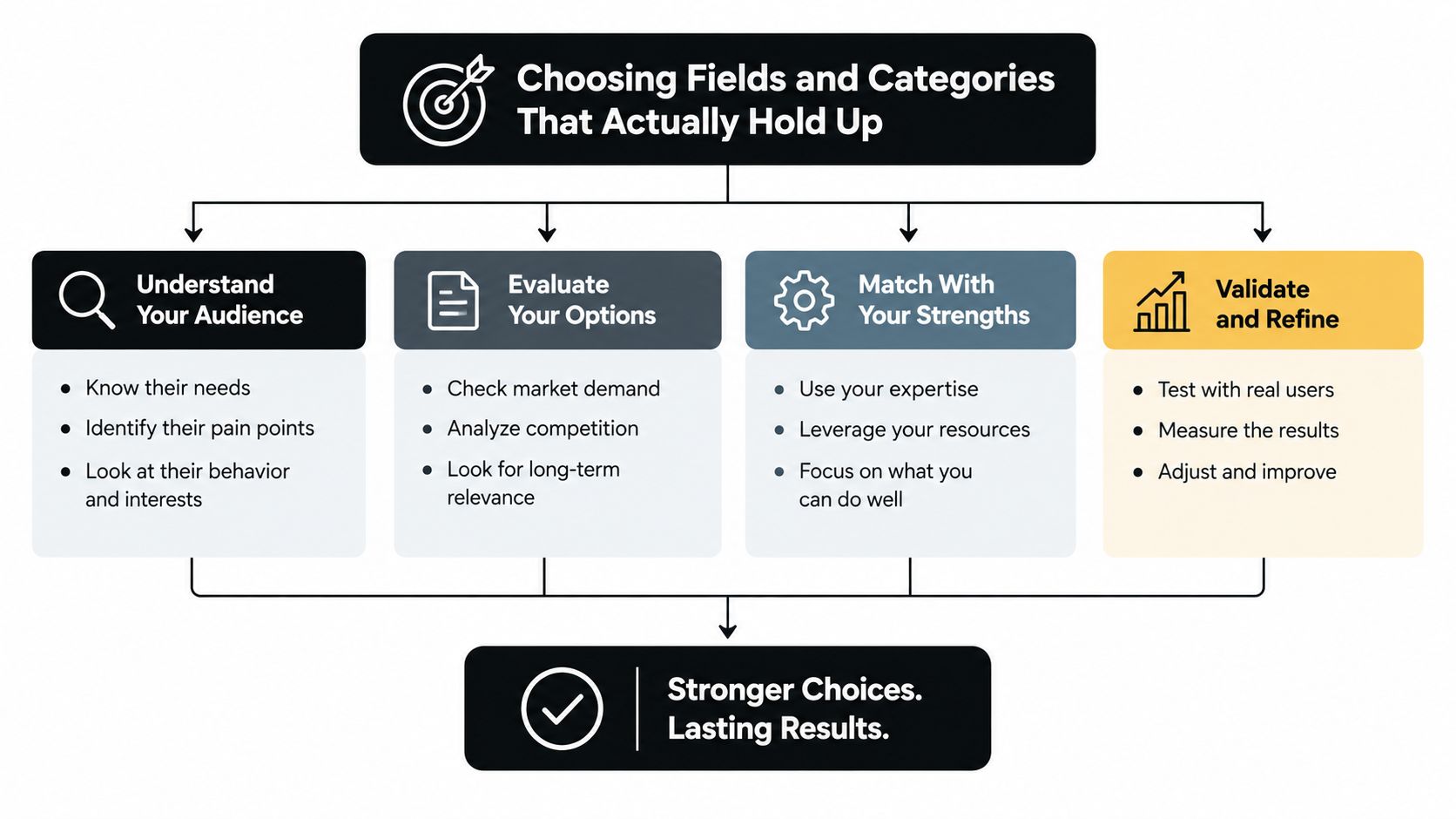
The strongest record is created at the moment of purchase, not during a rushed review before mediation. Use structured fields so that every entry answers the same questions, even when you're tired, upset, or recording several transactions at once.
The minimum data model
Keep the expense date separate from the entry date. The first shows when the cost occurred. The second shows when you documented it. An immutable creation timestamp and a preserved edit history can later show whether a note was contemporaneous or reconstructed.
Every expense should also identify:
- Child: Use a specific child field rather than grouping siblings together.
- Purpose: State the practical child-related reason for the cost.
- Category: Select from a consistent list.
- Payer: Identify who paid the provider.
- Amount paid: Record the full transaction amount.
- Amount potentially owed: Apply the relevant agreement or order.
- Payment method: Note card, bank transfer, cash, or another method.
- Supporting proof: Link the receipt, invoice, statement, or other document.
- Agreement basis: Identify the clause or rule that may govern recovery.
- Status: Use neutral labels such as requested, agreed, partially repaid, disputed, or unresolved.
A complete example might read: “Expense date, 12 March. Entry date, 12 March. Child, A. Medical, dental retainer. Payer, Parent A. Amount paid, full provider invoice. Amount potentially owed, other parent's agreed share. Receipt attached. Reimbursement requested by email on the same date. Status, requested.” The record should preserve the underlying proof rather than relying on that summary alone.
Recommended categories and examples
| Category | What it covers | Typical receipt |
|---|---|---|
| Medical | Appointments, prescriptions, dental care, therapy, and related treatment | Provider invoice or pharmacy receipt |
| Education | School charges, required materials, uniforms, or approved education costs | School invoice or itemized store receipt |
| Childcare | Care arranged so a parent can work or meet another qualifying need | Care provider invoice |
| Activities | Sports, lessons, clubs, and extracurricular participation | Registration confirmation or activity invoice |
| Essentials | Necessary clothing, equipment, or child-specific supplies | Itemized retail receipt |
| Transport | Child-related travel or transportation costs where the agreement addresses them | Ticket, mileage record, or receipt |
Categories should remain stable. Don't create “doctor,” “medical,” “clinic,” and “health” as separate labels for the same type of expense. A consistent checklist, such as this co-parenting expense checklist, can reduce omissions, but it can't determine what your order legally requires.
Practical rule: A category describes the expense. It doesn't prove that the other parent owes reimbursement.
Capturing Receipts and Proof at the Moment of Expense
A receipt is most useful when it remains legible and connected to context. Thermal paper fades, screenshots disappear among unrelated images, and a forwarded copy may lose information about when it was obtained. Capture the document when you incur the expense, then link it to the entry before moving on.
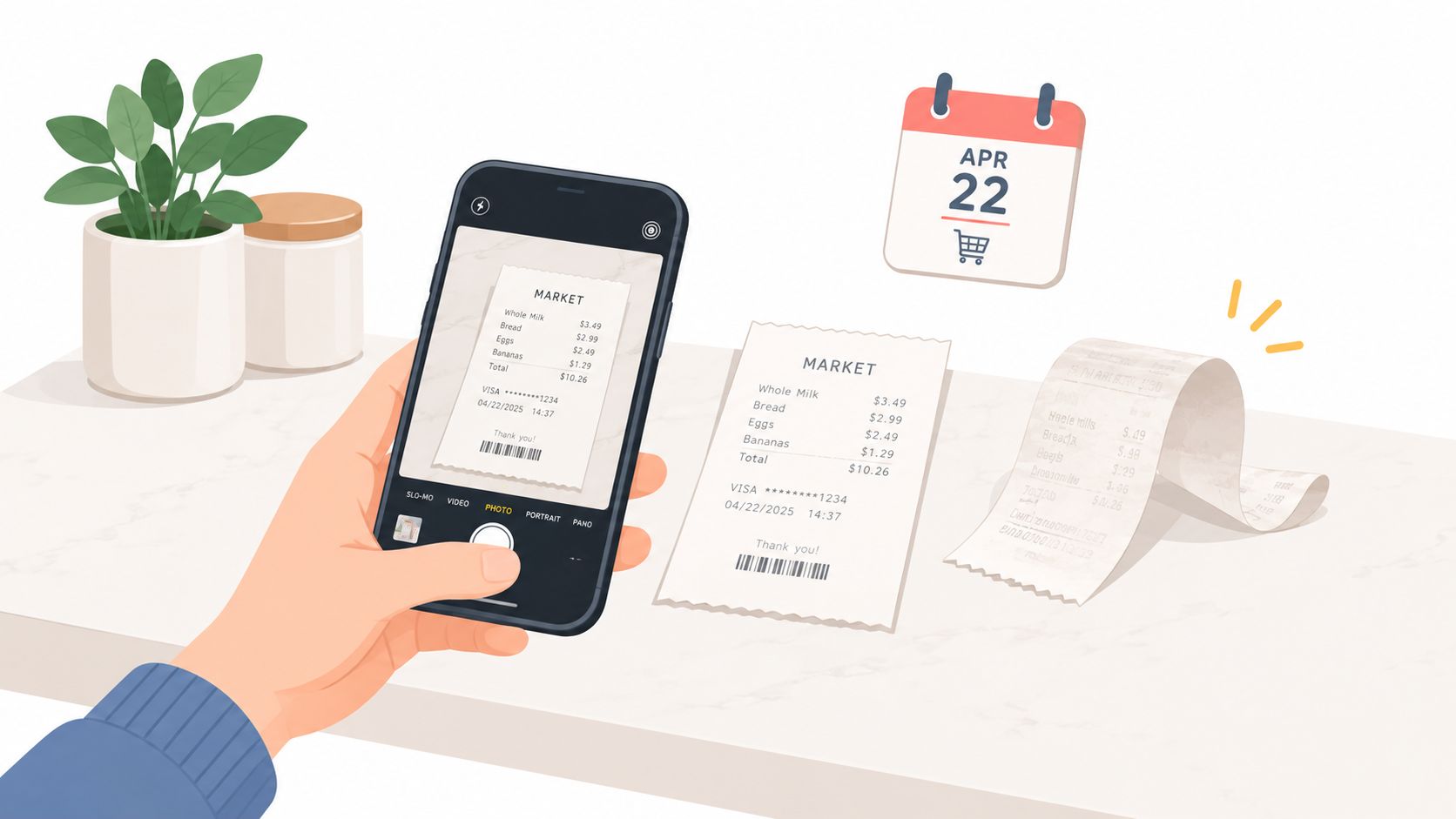
Use the original digital invoice where one exists. For paper, scan or photograph the entire document, including the merchant, date, items, total, and payment details where shown. Avoid cropping away the part that connects the cost to the provider or transaction. If the receipt arrives later, record that fact in the entry rather than making the record appear contemporaneous.
Cash expenses need more care because the bank trail may be absent. Record the date, provider, purpose, amount, and why cash was used. Attach any invoice, appointment confirmation, written acknowledgment, or other document that supports the transaction. Don't create a receipt yourself and present it as a provider-issued document.
The receipt alone usually isn't enough. Independent guidance on family expense records emphasizes connecting proof to the child-related purpose, the dated expense, the reimbursement request, and the payment outcome (Casewell guidance on records). That connection is the difference between a folder of images and an auditable entry.
A same-day capture checklist
- Identify the child: Don't leave the child field for later.
- Describe the purpose: Use neutral, concrete wording.
- Enter the amount: Preserve the original total before calculating a share.
- Attach proof: Add the complete receipt or invoice.
- Record the payer: Note who made the purchase.
- Check the agreement: Save the relevant clause or reference.
- Note missing context: Explain if proof will arrive later.
For a broader filing routine, organizing receipts for co-parenting records should be treated as part of the transaction itself, not a separate chore performed only when conflict begins.
A short visual demonstration can help establish the habit, but the workflow still depends on linking the image to the correct record.
Logging Who Paid and How Reimbursement Was Requested
Recording the purchase is only the beginning. The reimbursement request needs its own dated event, linked to the original expense, because the amount paid and the amount requested may differ.
Consider a $480 orthodontist visit as a practical example. The figure is illustrative, not a legal rule. Parent A pays the provider, attaches the invoice, identifies the child, and records the agreement clause. Parent A then submits a reimbursement request for the applicable share. The ledger should preserve the original expense and the request as separate events, even if they occur on the same day.
Link each stage instead of overwriting the entry
The request record should show:
- Request date and time: When the other parent received the request, if that can be established.
- Channel: Email, an ordered communication platform, letter, or another permitted method.
- Amount requested: The claimed share, distinct from the provider's total.
- Deadline: The agreement's submission or response window, if one applies.
- Documents sent: Receipt, invoice, insurance explanation, or relevant approval.
- Response: Agreed, disputed, partly accepted, ignored, or awaiting information.
- Repayment: Each amount received, with date and method.
- Balance: The amount still claimed or unpaid.
If Parent B pays part of the claimed amount, don't replace the original request with the new balance. Add a repayment event and let the ledger show the calculation. This prevents a later reviewer from mistaking a partial payment for a full settlement.
Disputed and agreed items belong in the same chronological ledger. Separating them into different files may feel tidy, but it can conceal the sequence of requests and responses. Use a status field instead, and preserve the original notes and attached documents.
The practical guidance in how to request reimbursement is most useful when the request can be matched to a specific expense rather than sent as an unexplained monthly total.
A complete record doesn't turn an unsupported claim into an enforceable one. It shows exactly what happened, which is valuable even when the answer is unfavorable.
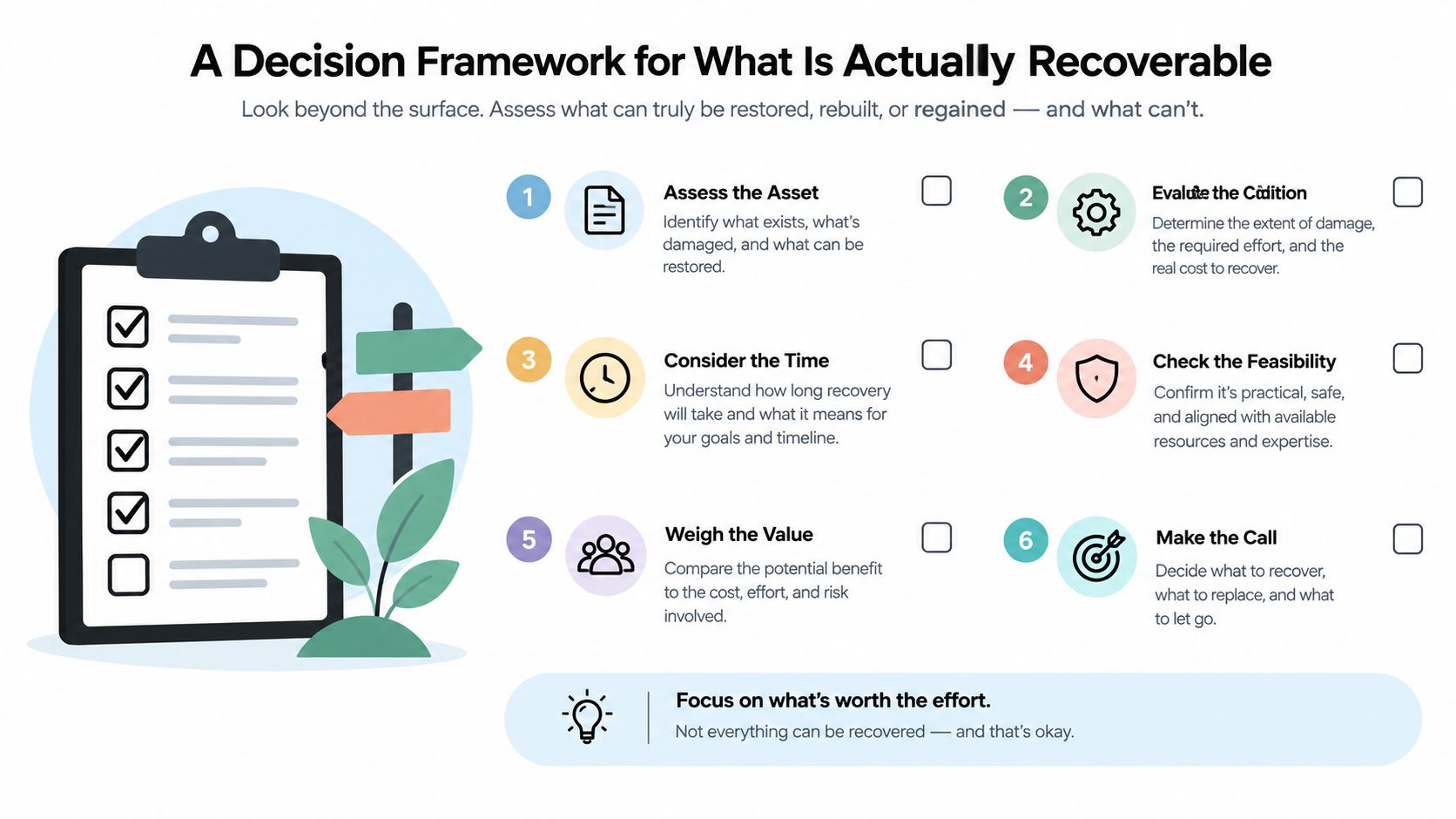
A Decision Framework for What Is Actually Recoverable
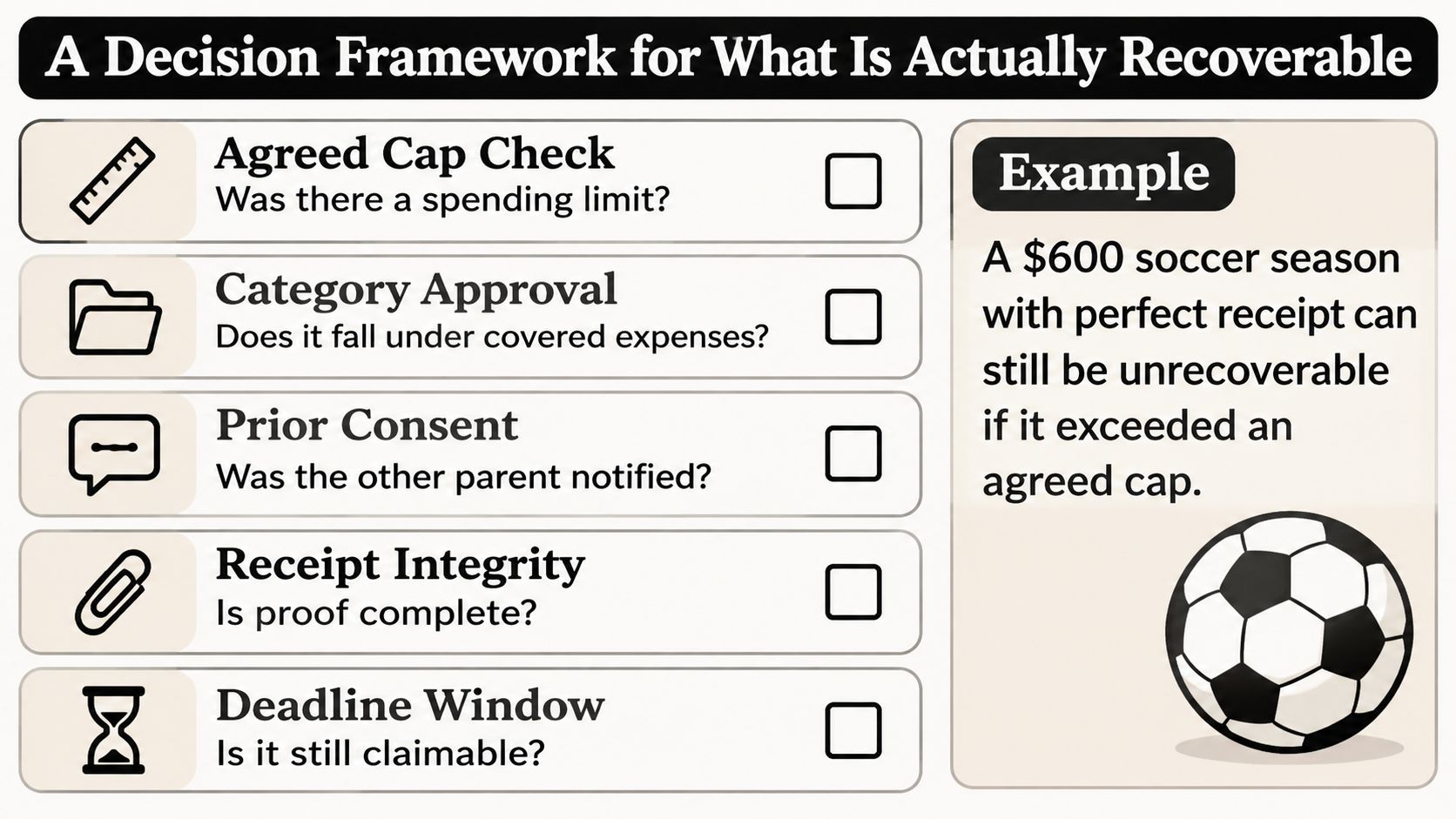
Detailed documentation doesn't guarantee reimbursement. A perfectly photographed receipt can still relate to an expense that exceeded an agreed cap, required advance consent, fell outside the covered category, or missed a submission deadline.
Before labeling an entry “owed,” record the legal and practical basis for that conclusion. The tracker should distinguish amount paid from amount potentially owed. It should also capture insurance payments, refunds, discounts, credits, or other amounts that reduce the net cost.
Test the expense against the controlling rule
Use five checks:
- Agreement clause: Which paragraph, order, or written term addresses this type of expense?
- Category: Is the expense routine, necessary, discretionary, or outside the defined categories?
- Approval: Did the agreement require advance written consent, and was that consent obtained?
- Cap and split: Does a spending limit or percentage apply?
- Deadline: Was the request made within the required submission window?
A $600 soccer season with a complete receipt may still be unrecoverable if it exceeded an agreed cap or required consent that wasn't obtained. Conversely, a missing receipt doesn't automatically answer every legal question, but it creates a proof problem that should be labeled clearly.
Reconcile the claim before calling it a balance
For each item, compare the ledger against four sources:
- The governing agreement: Confirm the category, cap, consent requirement, and split.
- The provider document: Match the date, child, service, and total.
- The bank or card record: Confirm who paid and whether the transaction cleared.
- The reimbursement trail: Match the request, response, repayment, and current balance.
Flag an exception when the figures don't align. Examples include a receipt total that differs from the bank charge, a request that includes a non-covered item, an insurance credit not reflected in the claim, or a repayment applied to the wrong expense.
A tracker records facts and calculations. It doesn't interpret unfamiliar law or replace advice from a qualified lawyer in your jurisdiction. If the clause is ambiguous, preserve the ambiguity and seek advice rather than presenting a prediction as a settled entitlement.
Reconciling Balances and Flagging Exceptions Monthly
A ledger can be accurate at capture and still drift over time. Reconciliation creates a repeatable checkpoint where you compare the records with the money that moved.
Choose a consistent point, such as after a card statement closes or during the first weekend of each month. The date matters less than using the same method each time. Record the reconciliation as its own dated event and identify the period and entries reviewed.
The monthly review
Start with a summary by child and category:
- Total expenses: Add the full provider amounts.
- Each parent's payments: Separate who paid the provider from who repaid the other parent.
- Requests sent: Total the reimbursement amounts requested during the period.
- Repayments received: Match each incoming payment to an expense or repayment event.
- Outstanding balance: Calculate what remains after credits and repayments.
Then inspect exceptions rather than rereading every note. Missing receipts, duplicate amounts, late requests, unexplained partial payments, negative balances, and stale unresolved entries deserve attention. A negative balance may mean an overpayment, a duplicate entry, or a calculation error. Don't correct it without a trace. Add a dated correction or explanatory event so the earlier record remains visible.
The recurring record should answer, “What did I know and what did I record at the time?” That makes contemporaneous entries more useful than a polished spreadsheet created immediately before a hearing.
Keep interpretation out of the accounting fields
Use “requested,” “partially repaid,” “disputed,” and “unresolved” rather than labels such as “bad faith” or “refuses to pay.” Facts belong in the expense and repayment fields. If a response contains an explanation or disagreement, preserve the original communication separately and summarize it neutrally.
A private workflow can be more reliable than a shared one when the purpose is documentation rather than coordination. A single-user record lets you capture expenses consistently without making every draft note, unrelated message, or private family detail visible to the other parent.
Privacy, Evidentiary Integrity, and Selective Reporting
A custody record can contain far more than financial data. It may reveal a child's location, school routine, medical information, household schedule, and private communications. The safest system collects what supports the specific issue and avoids importing everything available.
Digital evidence is stronger when its origin and history are clear. Preserve the original receipt or file, record when it was obtained, identify the related child and agreement clause, and retain edit history. Don't alter a screenshot to remove inconvenient context. Instead, keep the original and create a focused export that includes only the relevant time period, category, or transaction.
Use the least-disclosure workflow
A private expense record should not automatically include:
- Unrelated messages: Import only the communication that proves the request, response, or repayment.
- Unconnected transactions: Don't attach an entire bank statement when a transaction record is sufficient.
- Irrelevant child details: Link the expense to the child without exposing unrelated schedules or locations.
- Speculative commentary: Preserve factual observations, not conclusions about motive.
- Unnecessary personal data: Redact or exclude information that doesn't help establish the claim, where lawful and appropriate.
Lawful collection matters. Recording conversations, forwarding messages, storing medical documents, and sharing screenshots can be subject to jurisdiction-specific rules. A platform's export function doesn't make every collection method lawful or every record admissible. Ask your lawyer or mediator about local requirements before recording communications or submitting sensitive material.
What a focused export should contain
A professional review usually benefits from a readable sequence:
- The governing clause or agreement reference.
- The expense date and entry date.
- The child, category, purpose, payer, and amount.
- The attached receipt or invoice.
- The reimbursement request and delivery details.
- The response, repayment events, and calculated balance.
- The edit history and any reconciliation notes.
- Only the relevant period and category.
Casewell is one private option that keeps dated custody and expense records under the user's control, links receipts and repayment events to entries, preserves edit history, and produces filtered PDF reports for professional review. Its single-user design is different from a shared messaging platform, so it may fit documentation needs where automatic communication would create unnecessary exposure.
A transparent shared platform can help cooperative parents coordinate, but it can also increase conflict when every draft, unrelated note, or sensitive attachment becomes visible. The right question isn't whether the system shares everything. It's whether it preserves the necessary evidence while disclosing as little unrelated information as possible.
Build the habit before the dispute escalates. Record the governing clause, capture the receipt, log the request, preserve every repayment, reconcile the balance, and export only what the issue requires. If you want a private workspace for that reimbursement lifecycle, visit Casewell to organize expenses, supporting proof, and focused records for mediation or professional review.