

The kitchen is quiet the morning after the separation conversation. One parent is staring at a phone full of unsent messages, trying to decide who will collect the children from school, where they'll sleep tonight, and whether asking for clarity will start another argument. There's no signed parenting plan, no agreed system for expenses, and no reliable record of what was said the night before.
That uncertainty is normal, but waiting for one legal milestone to solve it is a mistake. Parents are separating across four tracks at once: legal positioning, children's emotional stability, daily logistics, and factual documentation. The choices you make now can affect school routines, handovers, finances, professional advice, and later court review.
The practical objective isn't to create a perfect separation immediately. It's to make the next decision calm, predictable, and verifiable.
The First 48 Hours After Parents Decide to Separate
The first two days are rarely the time for a final parenting plan. They are the time to prevent avoidable damage.
Start with the children's immediate needs. Decide where they'll sleep, who handles school or childcare, how transportation will work, and how each parent will communicate necessary information. Keep the explanation to the children simple and age-appropriate. They need reassurance that the separation isn't their fault, that both parents love them, and that adults are responsible for adult decisions.
Don't use the children as messengers. Don't ask them to report on the other home. Don't promise a schedule you haven't checked with the other parent. Stability comes from repeated, reliable actions, not from a single emotional conversation.
Four tracks require attention
Legal positioning means preserving important documents, understanding existing rights, and getting advice before making a major housing, school, travel, or financial decision.
Emotional stabilization means protecting the children from adult conflict and watching for changes in sleep, school attendance, mood, friendships, or physical complaints. A 2025 meta-analysis found that children's adjustment was more strongly associated with the quality of interparental and parent-child relationships than with separation alone. The study also linked interparental conflict with poorer adjustment, which makes conflict exposure a practical issue, not merely a relationship problem. Read the 2025 meta-analysis on relationships and child adjustment
Daily logistics include handovers, school activities, medication, clothing, meals, homework, transport, and communication about changes.
Documentation means recording what happened while the details are fresh. Write the date, time, arrangement, event, and child-related impact. Avoid conclusions such as “the other parent is irresponsible.” Record the observable fact, such as “The agreed pickup did not occur by the agreed time. I sent a message at [time] and arranged alternative collection.”
Practical rule: If a professional later asks what happened, a dated sequence of ordinary facts is more useful than a folder of angry messages.
Create a temporary routine even if it feels imperfect. A predictable arrangement gives the children something to rely on and gives both parents a baseline against which changes can be identified. Don't treat the first schedule as a permanent judgment about either parent. Treat it as a controlled starting point that can be reviewed when you have better information.
Immediate Legal and Practical Priorities
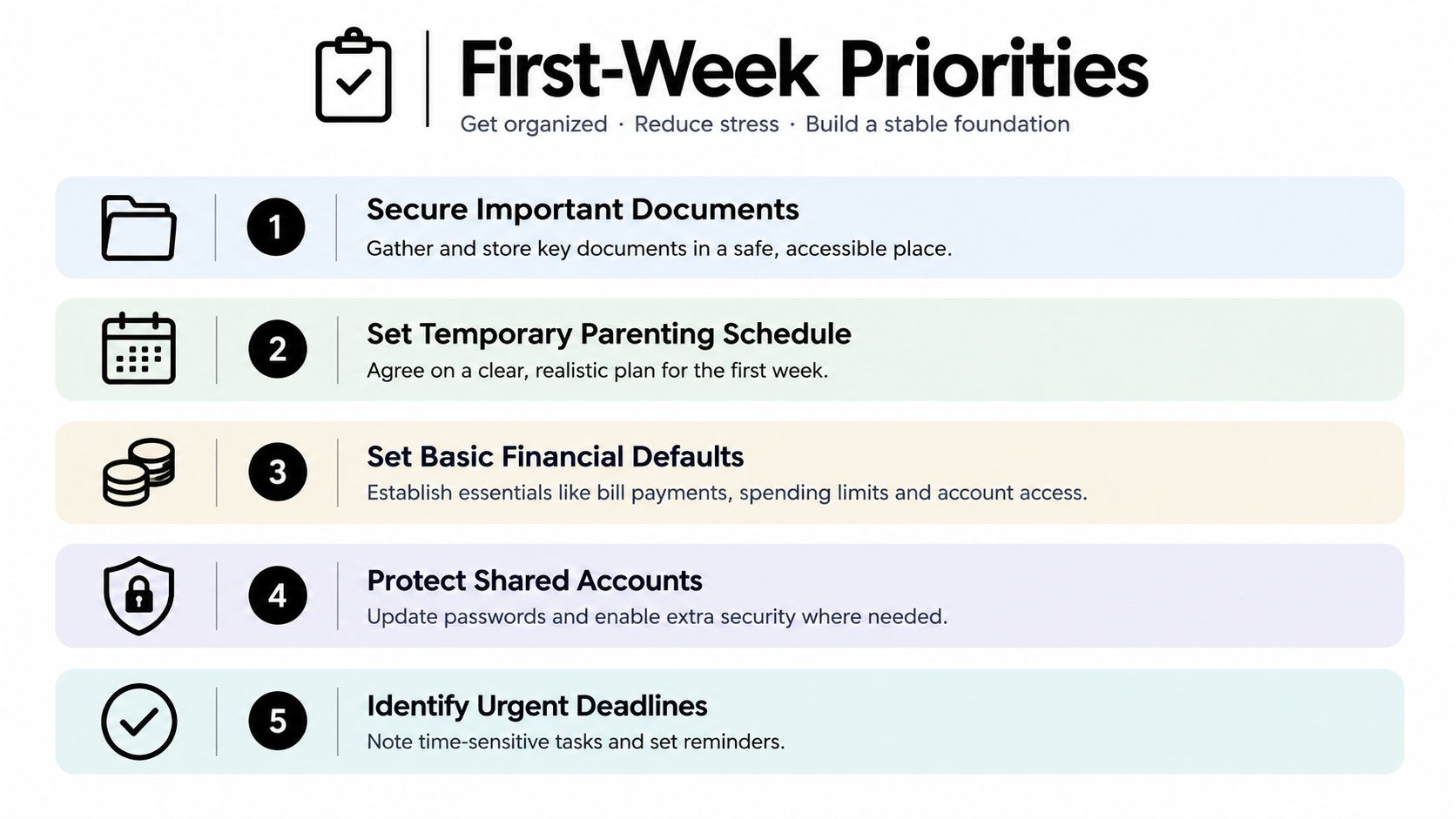
The first week calls for triage, not grand strategy. Secure the information that can disappear, establish a workable temporary routine, and identify decisions that require legal advice.
Secure the factual foundation
Gather copies of:
- Identity and child documents: Keep accessible copies of identification, birth records, passports, school information, healthcare details, and existing parenting agreements.
- Financial records: Save statements, payslips, tax records, insurance information, loan details, recurring bills, and records of child-related payments.
- Existing arrangements: Preserve written agreements, court orders, school calendars, medical instructions, travel permissions, and relevant correspondence.
- Digital access information: Review shared accounts, banking access, cloud storage, and devices lawfully available to you. Don't guess at passwords or access accounts you're not entitled to use.
Put a temporary schedule in writing
A useful interim schedule states the days, times, locations, transport responsibilities, school arrangements, holiday assumptions, and the method for requesting changes. It should also identify how urgent health or school information will be shared.
A written informal arrangement can reduce confusion, but it isn't the same as a court-sanctioned interim order. If one parent may remove the children, withhold them, sell or conceal assets, change the children's school, or create a safety risk, speak with a family-law solicitor or attorney promptly. Don't rely on a casual text agreement to manage an urgent legal problem.
Avoid dramatic self-help measures. Changing locks, draining joint accounts, cancelling insurance, moving the children without advice, or posting accusations online can create legal and practical consequences. Protect yourself, but do it through documented steps and professional guidance.
For procedural orientation, use this guide to filing custody papers, then obtain advice specific to your jurisdiction. The right filing, deadline, and service requirements depend on local law.
Set basic financial defaults
Decide who pays ordinary child-related bills while the arrangement is temporary. Keep payments traceable. Use clear references, save receipts, and record requests and responses. Don't turn every unpaid amount into a character argument. Treat it as an item that needs a date, amount, agreement, and status.
If there are immediate safety concerns, coercive control, threats, or pressure involving the children, legal filings, housing, or money, don't begin with a joint problem-solving meeting just because cooperation sounds preferable. Safety changes the appropriate process.
Building a Documentation Habit From Day One
A custody record should answer five questions quickly: what happened, when it happened, who was involved, what affected the child, and what supports the account. A memory may be sincere and still become unreliable under stress. A structured entry preserves sequence and separates observation from interpretation.
Use consistent fields:
- Event type: Exchange, communication, expense, school, medical, agreement deviation, or child wellbeing.
- Title: “School pickup not completed” is stronger than “Another bad day.”
- Date and time: Record when the event occurred and when you made the entry.
- Child and category: Identify the child and the relevant area.
- Factual description: State what you saw, received, sent, paid, or were told.
- Impact and response: Note the practical effect on the child and what you did next.
- Evidence: Attach the relevant message, receipt, photograph, document, or calendar record.
Four entries that show the difference
A missed exchange might read: “Agreed pickup at the school gate. No arrival by the agreed time. Message sent requesting an update. Child remained with the collecting parent and was told only that plans had changed.” Don't add “The other parent abandoned the child” unless a professional has advised that a specific legal characterization is appropriate.
For a reimbursement dispute, record the expense, payer, agreement or prior approval, receipt, request date, response, and any repayment. “Reimbursement request sent with receipt. No payment received by the recorded follow-up date” is useful. “Refuses to support the child” is an interpretation.
A concerning message should preserve the original message, its timestamp, the channel, and the immediate context. Summarize the observable concern without editing the original or provoking a confrontation.
A holiday deviation should identify the agreed schedule, the actual change, notice given, transport consequences, and the child's practical experience. A professional can assess the significance later. Your job is to preserve the sequence accurately.
A good record doesn't try to win the argument. It makes the argument easier to understand.
Screenshots in a phone gallery, scattered notes, and email drafts create gaps. A structured journal makes repeated events searchable and lets a mediator, lawyer, or safeguarding professional review a focused period instead of a chaotic archive. A co-parenting journal framework can help you decide which fields to use, even if you ultimately keep records in a spreadsheet or secure folder.
Don't record every irritation. Record events that affect parenting time, safety, health, school, agreements, communication, money, or the child's functioning. Consistency matters more than volume.
Choosing Between Mediation, Collaborative Law, and Litigation
There isn't one correct process for every separation. The right choice depends on safety, conflict, financial complexity, urgency, and whether both parents can negotiate without intimidation.
Mediation usually fits parents who can exchange information safely, tolerate disagreement, and make decisions with a neutral professional's assistance. The mediator doesn't decide the case. The parents retain control over the outcome, but each should obtain independent legal advice before signing a binding agreement.
Collaborative law suits parents who want lawyers involved throughout negotiation and are prepared to settle outside court. It can provide more structure than mediation while preserving privacy and allowing the family to design practical terms.
Litigation is appropriate when urgent protection is needed, one parent repeatedly ignores agreements, facts are sharply disputed, or negotiation has become a tool for delay or control. Court is not a moral failure. It is sometimes the mechanism that creates enforceable boundaries.
| Process | Typical Cost | Speed | Control Over Outcome | Best Fit |
|---|---|---|---|---|
| Mediation | Often lower than contested litigation, but varies | Often faster when both parents participate | High, because parents negotiate | Low or moderate conflict where communication is safe |
| Collaborative law | Higher than mediation because lawyers participate throughout | Structured, with timing shaped by the participants | High, subject to negotiated agreement | Parents wanting legal support without a court hearing |
| Litigation | Can become expensive as disputes and hearings increase | Can be urgent when protection is needed, but contested matters may take time | Lower, because a judge decides disputed issues | Safety concerns, repeated non-compliance, or unresolved high conflict |
Bring a focused record to every process. In mediation, it can identify the practical disputes that need settlement. In collaborative work, it can keep negotiations anchored to dates and consequences. In litigation, it can help your lawyer identify the strongest evidence without searching through emotional commentary.
Before mediation, review this mediation preparation guide. If coercive control, fear, threats, or retaliation is present, tell the professional before the session and ask whether mediation is safe and suitable.
Tracking Expenses and Reimbursements Without Conflict Spirals
Money disputes become corrosive when parents argue about fairness instead of tracking the transaction. Use one record for each child-related expense and keep the language dull.
Capture:
- Transaction details: Amount, date, payer, child, category, and purpose.
- Supporting proof: Receipt, invoice, prescription, school notice, activity registration, or payment confirmation.
- Agreement status: Whether the cost was ordinary, approved in advance, or disputed before purchase.
- Request history: Date the reimbursement was requested, method used, response received, amount repaid, and balance outstanding.
- Practical consequence: Whether non-payment affected a medical appointment, activity, school requirement, transport arrangement, or another child-related need.
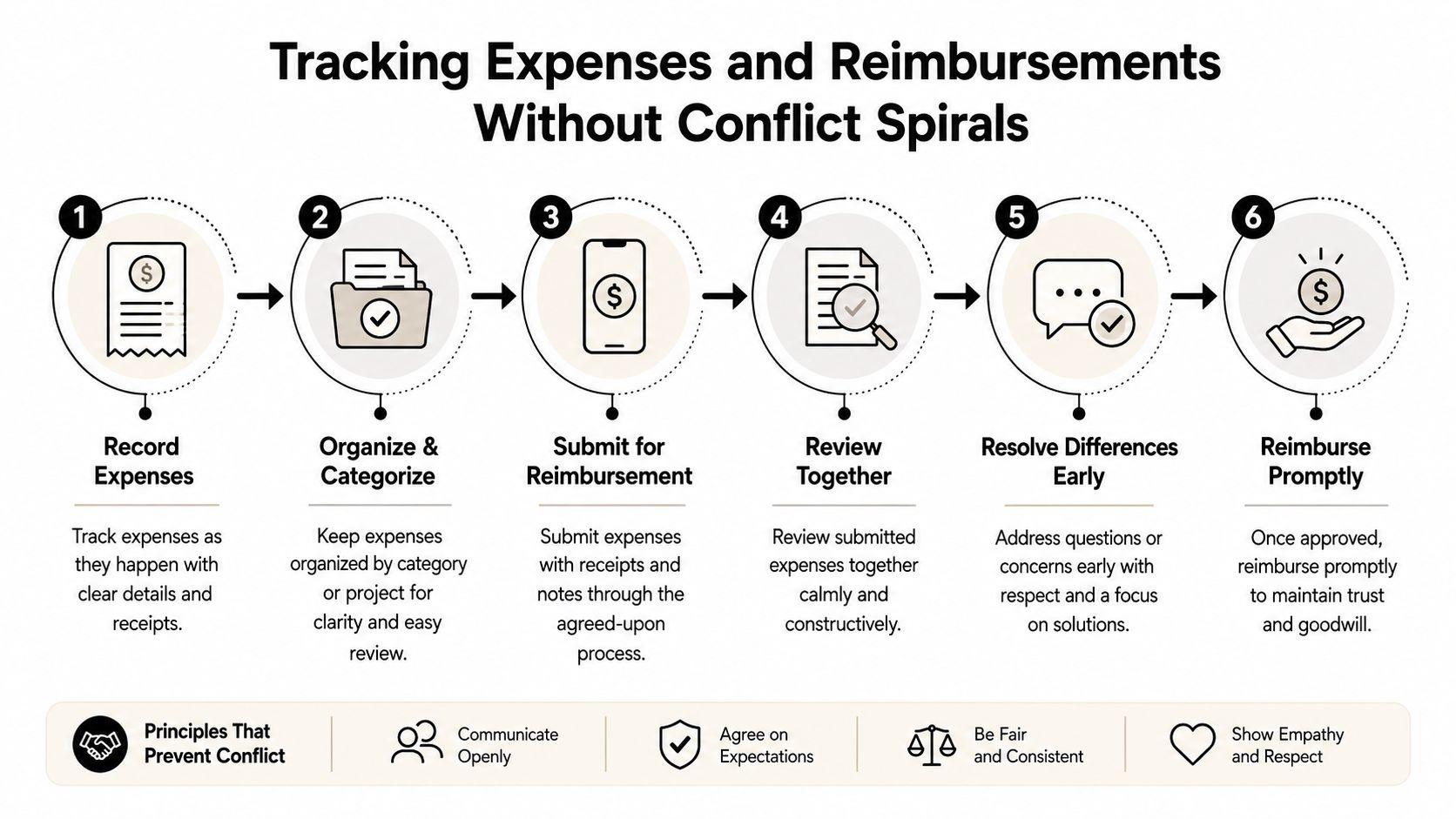
Write the request in a way that allows a response without a fight: “Receipt attached for the agreed medical expense. Please confirm receipt and advise when the reimbursable share will be paid.” If the other parent refuses, record the refusal and the reason given. Don't debate motives in the expense log.
A running balance is more persuasive than a series of angry reminders.
A dated financial record also captures the resource pressure created by separation. Research on separation describes how time, money, and engagement can be divided across households, with practical consequences for children's education, care, and opportunities. Review the 2024 synthesis on separation and resource allocation
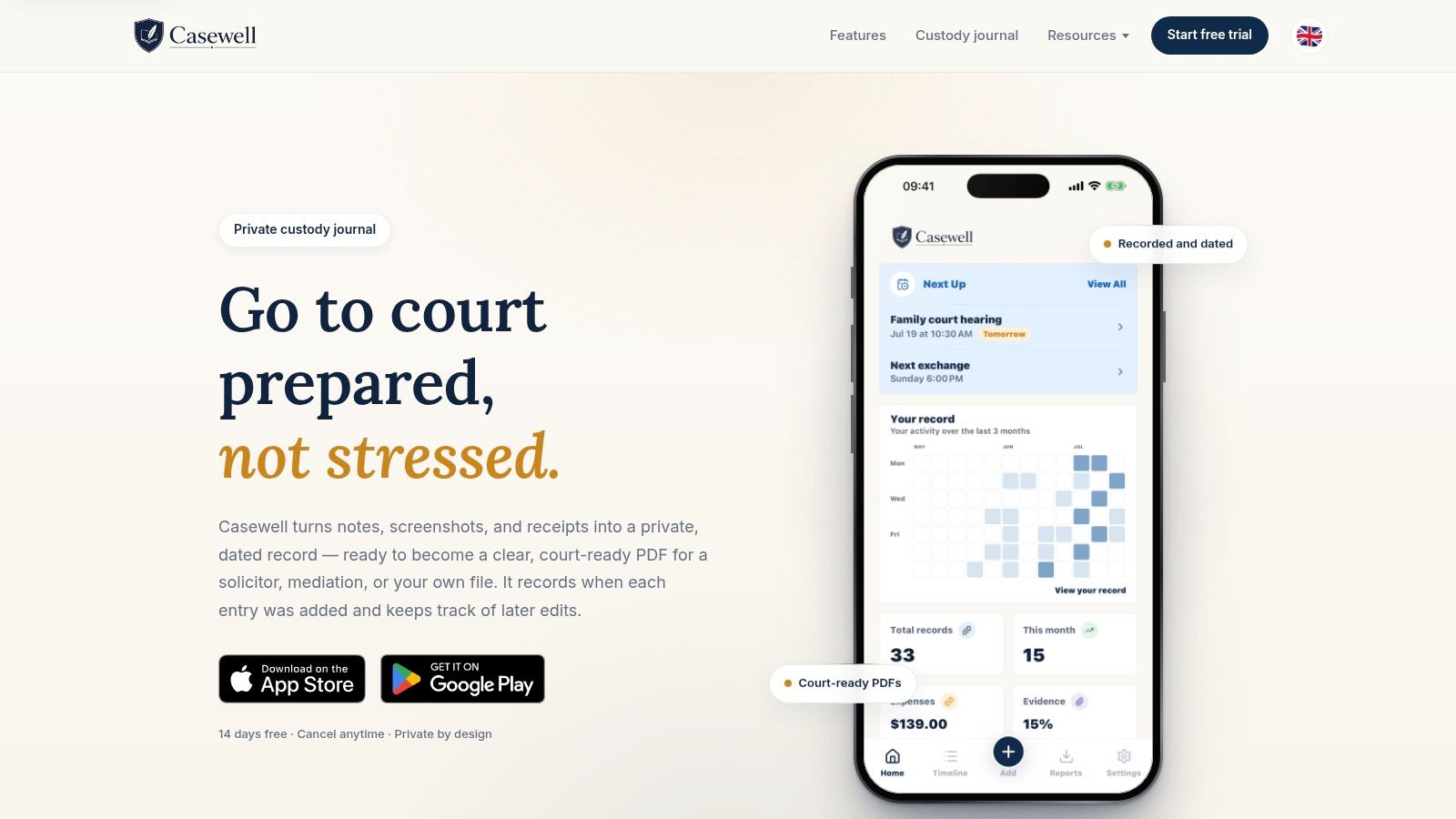
Casewell is one option for this task. It provides a private custody journal with structured entries, expense tracking, receipts, repayment records, attached evidence, and focused PDF exports for professional review. It's designed for personal record-keeping rather than direct co-parent communication.
Use this co-parenting expense checklist to create a one-page reconciliation. The page should show the opening balance, each expense or repayment, the evidence attached, and the current status. Send only what is necessary, through an appropriate channel, and keep the full record privately.
The following video can help parents think through a calmer reimbursement process:
Why Equal Parenting Time Is Not Always the Right Answer
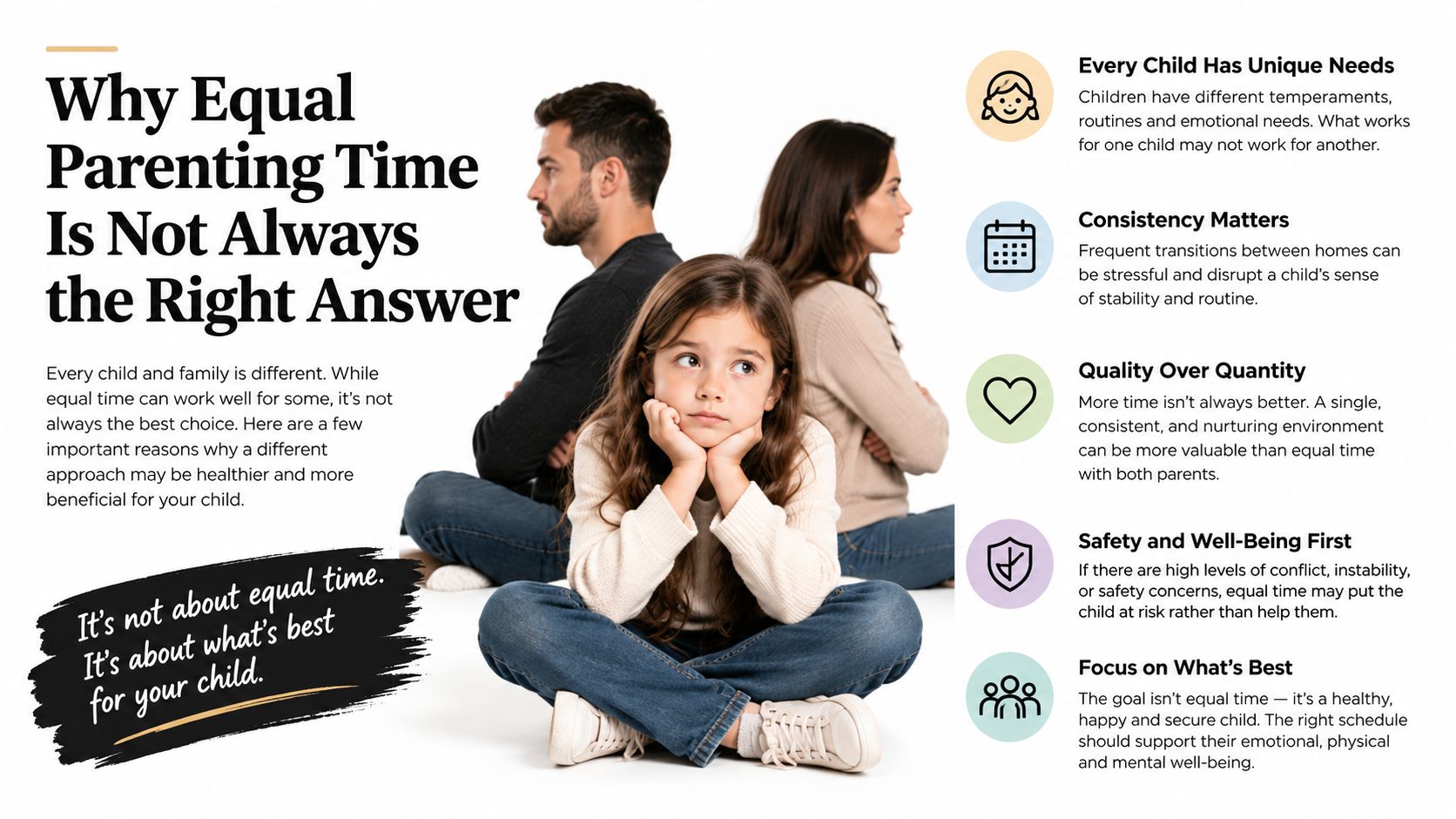
A 50/50 schedule can suit one family and unsettle another. Equal overnight counts do not guarantee equal security when handovers expose a child to hostility or the arrangement ignores school, sleep, distance, age, or the parents' ability to cooperate.
A 2025 research digest reported higher mental-health symptoms among adolescents with separated parents than among peers with non-separated parents, with standardized mean differences of roughly 0.15 to 0.20. It also found that joint physical custody was associated with slightly better mental and psychosomatic health for some school-aged children, while greater shared parenting was linked to poorer adjustment in high-conflict samples. Read the 2025 research on custody, conflict, and child adjustment
Set the schedule around the child's functioning, not an adult claim to equal time. A dated record gives you something concrete to review with a mediator, lawyer, pediatrician, therapist, or court-appointed professional.
Track the child, not just the calendar
Over an agreed review period, record:
- Transitions: Whether handovers are calm, delayed, crowded, or conflict-heavy.
- Sleep and health: Sleep disruption, missed medication, recurring physical complaints, or difficulty settling.
- School functioning: Attendance, punctuality, concentration, completed work, and missed activities.
- Emotional changes: Withdrawal, anxiety, anger, tearfulness, or unusual resistance, without assigning a diagnosis.
- Practical burden: Transport time, forgotten belongings, duplicated equipment, and disrupted routines.
- The child's words: Record spontaneous comments accurately. Do not repeatedly question the child or ask them to choose a parent.
A Swedish population-based study examined living arrangements and co-parenting quality among 12,845 three-year-olds, reinforcing that developmental stage and cooperation matter when professionals assess arrangements. Read the Swedish study on living arrangements and co-parenting quality
Do not coach the child, conduct an interrogation, or use comments as ammunition. Record what happened, when it happened, and what changed. Documentation shows a pattern, not causation by itself. Professionals can then assess whether the schedule supports this child's stability and needs.
When Documentation Has to Protect You, Not the Relationship
Co-parenting advice often assumes that better communication is always the answer. It isn't. If one parent uses contact arrangements, money, the child, repeated legal applications, monitoring, threats, or procedural pressure to continue control after separation, increased access and cooperation can create more risk.
A 2025 qualitative study found that post-separation coercive control could intensify after separation and continue for more than 10 years, affecting how mothers communicated with and protected their children. A separate 2025 scoping review identified survivor-centred services, safety-focused court processes, physical distance, carefully chosen technology, and supervised or suspended contact as factors associated with improved safety. Review the research on post-separation coercive control
Record safely and share selectively
Use a device and account that the other parent can't access. Review location sharing, shared cloud accounts, family tracking tools, notification previews, and saved passwords. If checking these settings could trigger retaliation, ask an advocate or lawyer to help rather than announcing the change.
Write down observable conduct. Record the message, date, request, response, missed arrangement, threat, financial pressure, or child impact. Don't confront the other parent with a detailed dossier just to prove you've been keeping notes.
Store records securely and preserve originals. Share selected material with an advocate, lawyer, safeguarding professional, or appropriately trained service. A mediator should not be the automatic destination when one person fears the other.
Safety takes priority over the appearance of cooperative parenting.
A high-conflict or abusive relationship may require parallel parenting, supervised contact, separate arrival times, communication through a structured channel, or no direct contact beyond necessary child information. “More contact” and “better communication” aren't automatically safer or better for children. Get specific advice before adopting a shared calendar, joint meeting, or equal-time schedule.
Your 30-Day Action Plan After Separation
During the first week, secure documents and write down a temporary schedule. In the second, speak with a lawyer or suitable dispute-resolution professional. In the third, establish consistent records for exchanges, communication, child wellbeing, and expenses. In the fourth, reconcile outstanding costs and review the child's practical experience rather than counting overnights alone.
Documentation isn't about winning. It's about showing a calm, factual history when a mediator, lawyer, or judge asks difficult questions.
Casewell gives separated parents a private place to record exchanges, agreements, expenses, messages, child-related events, and supporting files in a dated timeline. If you need a structured record for your own review or a focused professional discussion, visit Casewell and start building the history you'll wish you had later.